
So You’re Hooked. Now, Which Pickleball Paddle Should You Buy?
You’ve caught the bug. You are playing three, maybe four times a week. You are dreaming about dinks. And now, you are looking at that generic starter paddle you’ve been using and thinking: I need an upgrade.
You open your laptop, ready to drop some cash on the newest, shiny gear.
Stop right there.
Before you click “Add to Cart,” read this. Finding the perfect paddle isn’t about spending the most money; it’s about finding the right tool for your game. Here is the honest guide to buying your first real paddle.
1. The Golden Rule: Try Before You Buy
The biggest mistake beginners make is buying a paddle based on a JPEG they saw online. You wouldn’t buy a car without a test drive, right?
Go to a local shop. Head to your local racquet shop. Most Tennis/Pickleball stores have a demo program where you can rent a few paddles for a small fee (which often goes toward the purchase price). Feel the weight. Test the grip.
2. Raid Your Friends’ Bags
If you have friends who are hardcore pickleball players, I guarantee you one thing: they have too many paddles.
Serious players are gear hoarders. They likely have their “current” paddle, their “backup,” and three or four “old” ones in their trunk. Ask to borrow one for a game. It saves you money and gives you a real-world test drive.
3. Conduct a “Court Poll”
When you are at the courts, look around. What is the local community using?
If you see five different people using the same paddle, there is a reason for it. It usually means that paddle offers great value and performance. Don’t be shy—ask people what they are playing with and why they like it. Picklers love talking about their gear.
4. Don’t Believe the “Pro” Hype
It is tempting to buy the paddle that the World #1 is using. But here is the hard truth: You are not a pro.
Pros are trained athletes with perfect mechanics. They can play with a piece of plywood and still beat 99% of us.
- The F1 Analogy: Could you drive a Formula 1 car? Probably. Could you drive it like Sebastian Vettel? Absolutely not. You’d likely spin out in the first corner.
Pro paddles are often designed for power and high-speed play. As a rising player, you need forgiveness and control, not just raw power.
5. Why “Expensive” Doesn’t Mean “Better”
There is a myth that a $280 paddle will instantly make you a 5.0 player. It won’t.
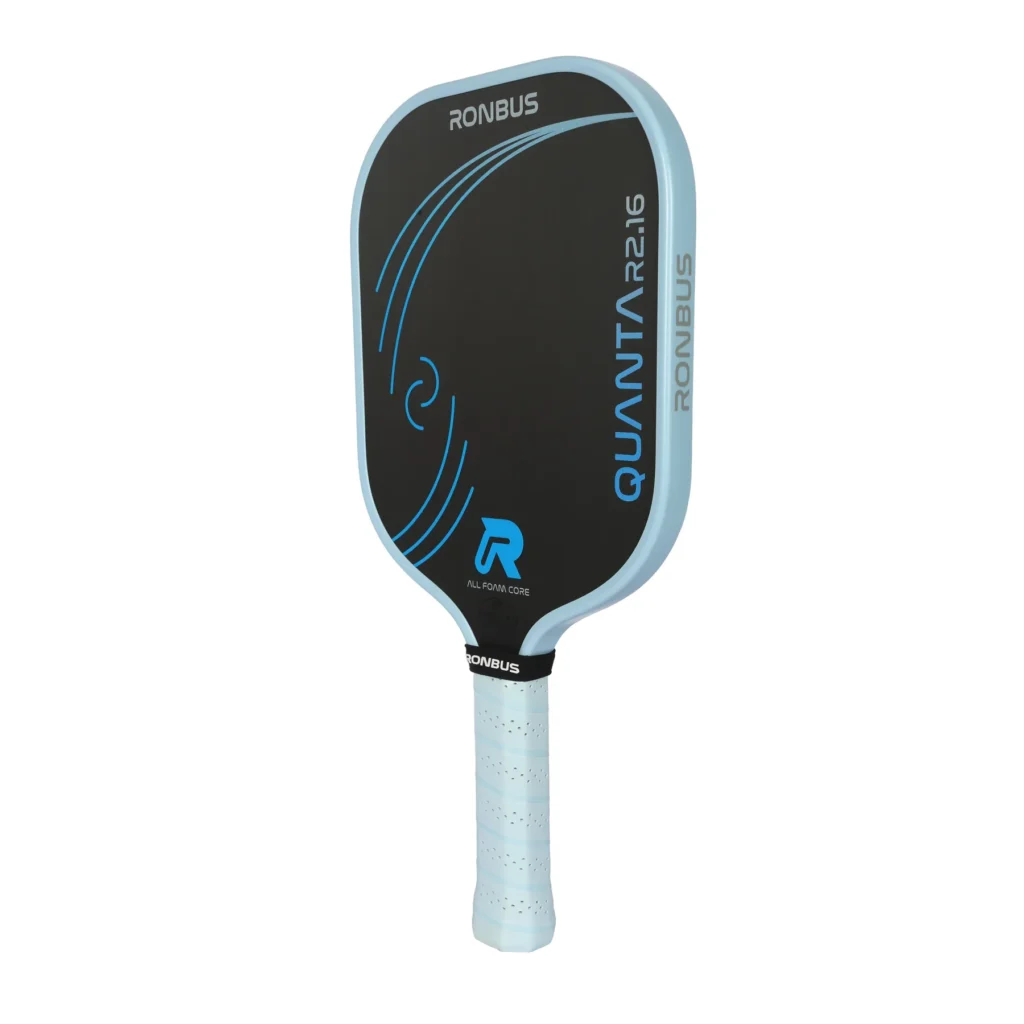
Take it from me. I own a $279 Paddle. It is a solid, pro-tier paddle and i play well with it. But do you know what I actually reach for? My $129 Ronbus Quanta R2.16 (blue version). My shots are more consistent and i don’t have wrist or shoulder pain like i do with the most expensive paddle.
Why?
- Consistency: The Ronbus Quanta R2.16 (blue version) has less “pop,” which means the ball stays on the paddle face longer. This gives me way more control over my dinks and resets.
- Forgiveness: The Ronbus has a wider body shape. If I hit the ball slightly off-center, it still goes over the net. The expensive pro paddle punishes me for those small mistakes; the “cheaper” paddle saves me.
Use Promo Code RCGFEE9W for 20$ off Paddles on Ronbus.com
The Bottom Line
Don’t rush the process. Demo as many paddles as you can. Ignore the marketing hype and focus on how the paddle feels in your hand.
If it gives you confidence, control, and a smile on your face—that’s the right paddle for you. See you on the courts!
Pickleball Demo Program in the San Francisco Bay Area:
SportBasement is offering a demo program and have many location around the Bay Area.
Town and Country Palo Alto and Zalles Racquet Sports Foster City is also offer a pickleball demo program.
